The South Downs Way is one of England’s most celebrated long-distance walking and cycling routes, stretching approximately 100 miles from Winchester to Eastbourne. Following the chalk ridgeline of the South Downs, the trail offers a continuous journey through rolling hills, open grassland, and sweeping coastal views, making it a favourite for hikers, cyclists, and nature lovers alike.
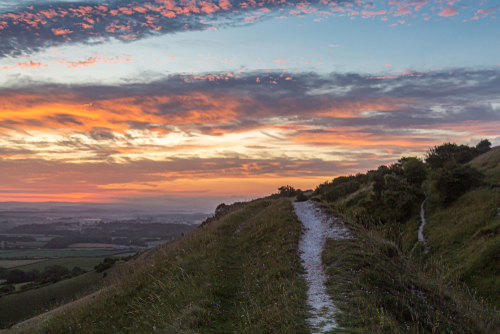
One of the defining features of the South Downs Way is its sense of space. Much of the route runs along elevated ground, providing wide, uninterrupted views across the surrounding countryside. To the north, you can often see patchwork fields and wooded valleys, while to the south the land gradually falls toward the English Channel. This constant visual contrast gives the trail a feeling of movement and openness, even when the terrain itself is relatively gentle.
The path passes through the South Downs National Park, an area known for its unique chalk landscape. The soil supports a rich variety of wildflowers, particularly in late spring and summer, when the hillsides can be dotted with colour. This biodiversity attracts butterflies, birds, and other wildlife, adding another layer of interest for those who take the time to look beyond the path itself.
Although the route is long, it is not technically difficult. The gradients are generally steady rather than steep, making it accessible to a wide range of fitness levels. Many people choose to complete it in sections, turning the trail into a series of day walks or weekend adventures. Others take on the full challenge over several days, carrying everything they need or relying on accommodation along the way.
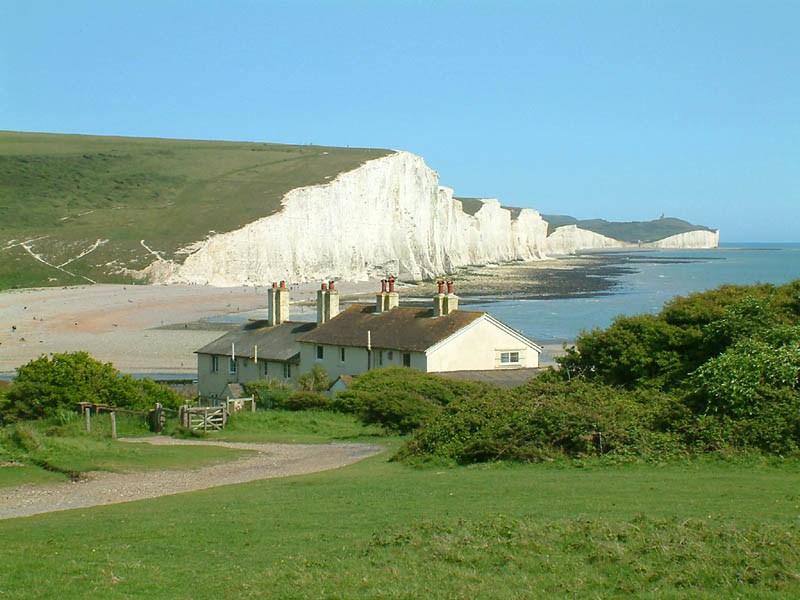
Historic landmarks are scattered throughout the route, giving a sense of continuity between the past and present. Ancient earthworks, hill forts, and traditional villages appear at intervals, reminding walkers that this landscape has been shaped and used for thousands of years. One of the most striking sections comes near the eastern end, where the trail approaches the dramatic cliffs of Beachy Head. Here, the land meets the sea in a series of steep, white chalk faces, providing a memorable finale for those travelling from west to east.
Weather plays a significant role in the South Downs Way experience. On clear days, the views can stretch for miles, creating a sense of calm and perspective. In contrast, mist or rain can transform the landscape into something more atmospheric and introspective. The exposed nature of the ridge means that wind is often a factor, particularly in higher sections, so preparation is important.
Despite its popularity, the trail rarely feels overcrowded. Its length and variety allow visitors to find quieter stretches, especially outside peak summer months. Whether you are seeking a physical challenge, a connection with nature, or simply time away from busy urban life, the South Downs Way offers a journey that is both accessible and deeply rewarding, capturing the understated beauty of southern England’s countryside.