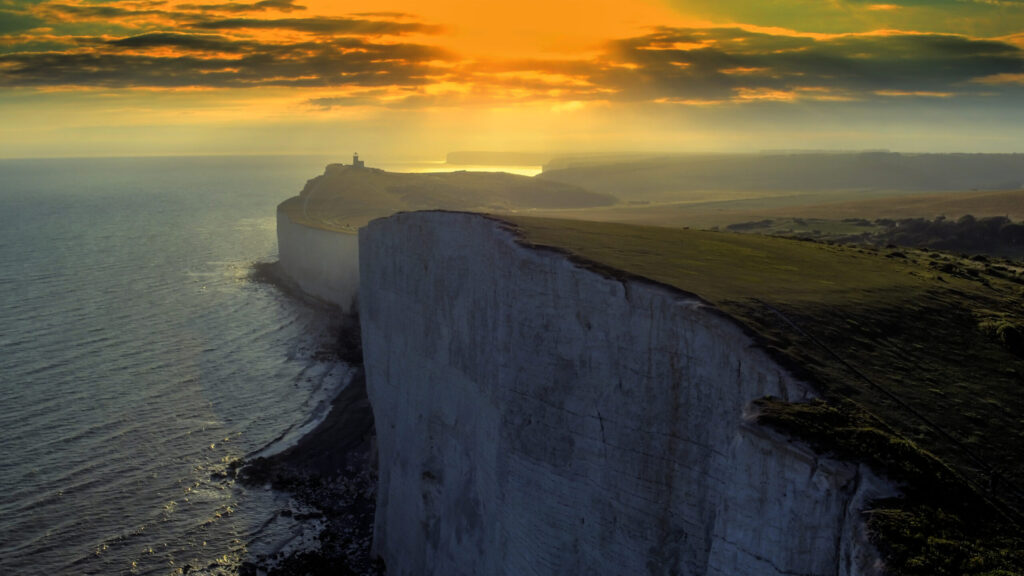
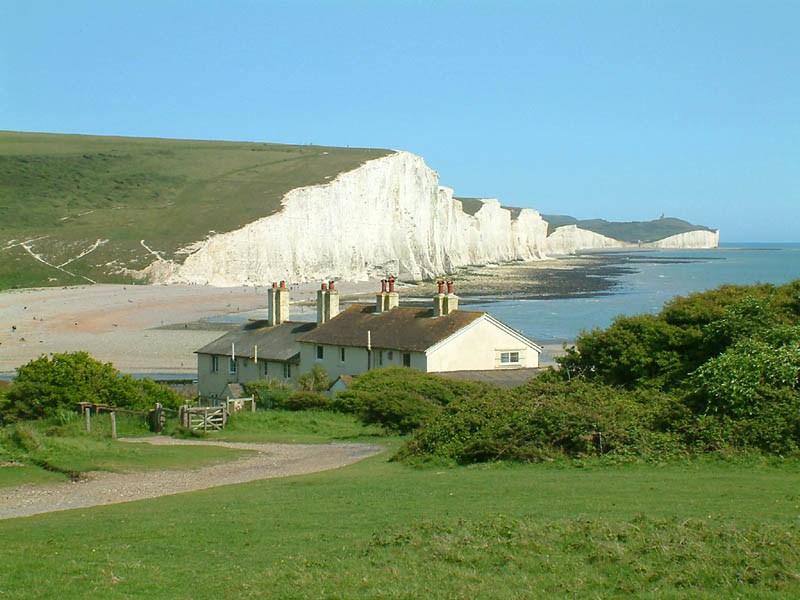
The Seven Sisters Cliffs are among the most striking natural landmarks on England’s south coast, known for their dramatic sequence of chalk headlands and sweeping sea views. Stretching between Seaford and Beachy Head, the cliffs form a series of undulating peaks and dips that create a distinctive silhouette, instantly recognisable in photographs and films.
The name “Seven Sisters” refers to the seven main hilltops that rise and fall along the coastline. Unlike the more sheer and continuous face of nearby Beachy Head, these cliffs are defined by their repeated pattern, each “sister” separated by a valley where a river or stream has cut through the chalk over thousands of years. This formation gives the landscape a rhythmic quality, as if the land itself is moving in waves toward the sea.
One of the most appealing aspects of the Seven Sisters is the sense of openness. The cliffs are part of the South Downs National Park, and much of the surrounding land is protected, meaning there is little development to interrupt the natural scenery. Walking along the cliff tops, visitors are rewarded with uninterrupted views across the English Channel, as well as inland vistas of rolling green hills and meandering river valleys.
The area is a favourite destination for walkers and hikers, particularly those following sections of the South Downs Way. The route across the Seven Sisters is both rewarding and physically demanding, with a series of steep ascents and descents that test stamina. However, the effort is more than compensated by the views, which change constantly as you move from one peak to the next.
At the western end lies Cuckmere Haven, where the Cuckmere River meets the sea in a winding, looping pattern. This area is particularly popular with photographers, thanks to its combination of water, meadow, and cliff scenery. The contrast between the bright white chalk and the deep blue or grey of the sea creates a visual impact that is both simple and powerful.
Wildlife also thrives in this environment. The chalk grassland supports a variety of wildflowers, especially in spring and summer, attracting butterflies and other insects. Seabirds nest along the cliff faces, and it is not uncommon to see them gliding on the coastal winds. This blend of plant and animal life adds depth to the landscape, making it more than just a scenic viewpoint.
Despite its beauty, the Seven Sisters coastline demands respect. The cliffs are constantly eroding, and edges can be unstable, so visitors are advised to keep a safe distance from the brink. Weather conditions can also change quickly, with strong winds adding an extra challenge to cliff-top walks.
What makes the Seven Sisters so memorable is the combination of scale, movement, and natural purity. It is a place where the forces of land and sea are clearly visible, shaping the environment in real time. Whether viewed from above or below, the cliffs remain one of the most powerful and enduring symbols of the English coastline.